
India is building at an unprecedented pace. From metro lines to highways, residential complexes to commercial towers, construction cranes dot every major city’s skyline. While this infrastructure boom signals economic growth, it comes with a severe environmental cost that affects millions of Indians daily.
The numbers are alarming: Construction activities contribute to approximately 23% of total air pollution in Indian cities, according to recent environmental studies. In major metropolitan areas like Delhi, Mumbai, and Bangalore, this figure can spike to 30-35% during peak construction seasons. The Central Pollution Control Board (CPCB) reports that construction dust alone accounts for 14-16% of PM10 and PM2.5 particulate matter in urban air.
Dust and Particulate Matter
Traditional construction methods generate massive amounts of dust through multiple processes:
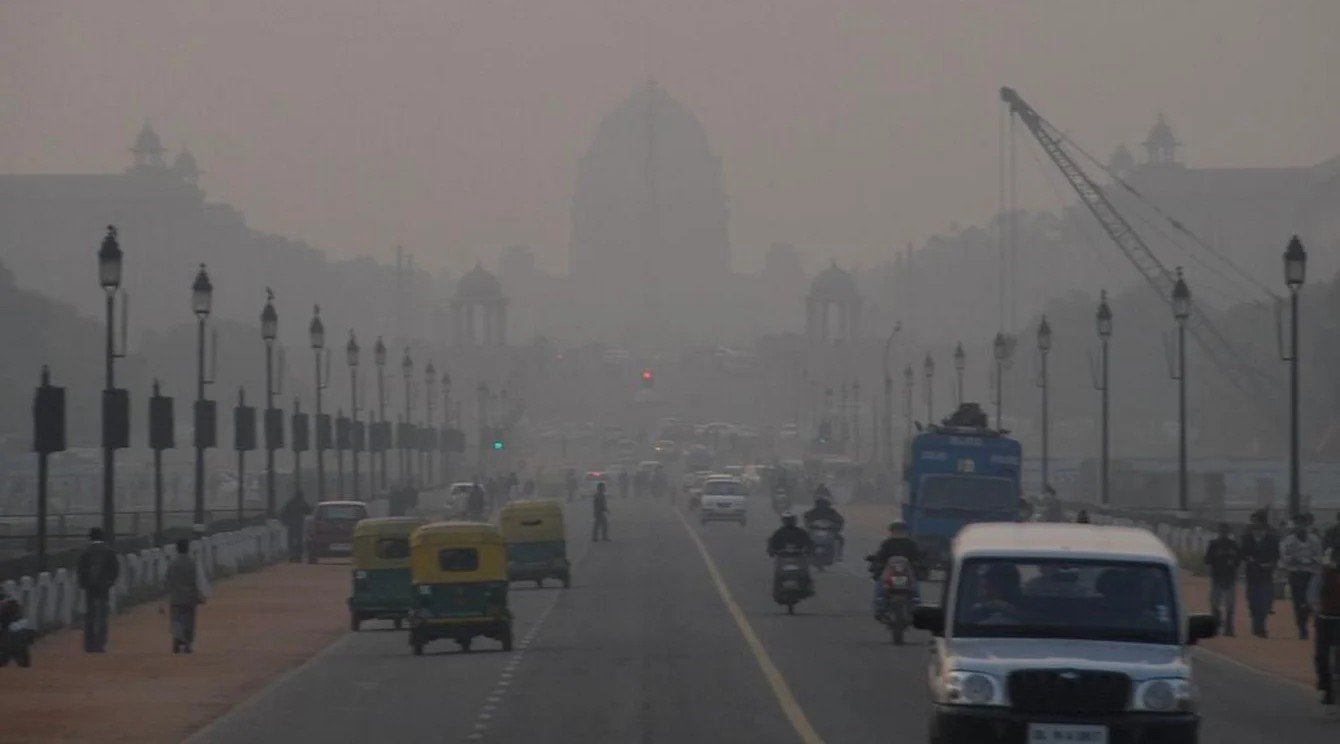
These fine particles, especially PM2.5 and PM10, penetrate deep into human lungs, causing respiratory diseases, cardiovascular problems, and reducing overall life expectancy. The World Health Organization estimates that air pollution in Indian cities causes over 1.67 million premature deaths annually, with construction dust being a significant contributor.
Traditional RCC (Reinforced Cement Concrete) construction consumes enormous quantities of water:
Concrete mixers, pile drivers, and heavy machinery create noise levels reaching 90-110 decibels in construction zones, well above the safe limit of 55 decibels for residential areas. Studies show that 42% of urban residents near construction sites report sleep disturbances and stress-related health issues.
Recognizing this crisis, Union Minister Piyush Goyal recently emphasized the need to shift from traditional concrete mixing to modular and steel construction methods. His call to move RC mixers out of cities reflects growing awareness that India’s construction practices must evolve to protect public health.
Several state governments have already begun implementing stricter regulations:
MDHNano’s revolutionary dry construction technology addresses pollution at its source:
Zero Concrete Mixing On-Site
Minimal Material Handling
Air Quality Improvement
Water Conservation
Noise Reduction
MDHNano’s Structural Insulated Panel (SIP) system and steel framework technology represents the future of clean construction:
Factory-Controlled Environment
Rapid On-Site Assembly
As India aims to build 25 million new housing units by 2030, the choice of construction technology will determine the livability of our cities. If all new construction adopted MDHNano’s modular technology, India could achieve:
The construction industry doesn’t have to be synonymous with pollution. MDHNano proves that you can build faster, stronger, and cleaner simultaneously. Our dry construction technology isn’t just good for homeowners – it’s essential for public health and environmental sustainability.
Every MDHNano home means: ✓ Cleaner air for the entire neighborhood ✓ Zero construction dust affecting nearby residents ✓ Minimal noise disturbance ✓ Responsible water usage ✓ A measurable contribution to better urban air quality
The question isn’t whether India can afford to adopt clean construction technology – it’s whether we can afford not to. With MDHNano’s modular solutions, building your dream home no longer means compromising your neighbor’s health or your city’s air quality.
Join the clean construction revolution. Choose MDHNano.
